

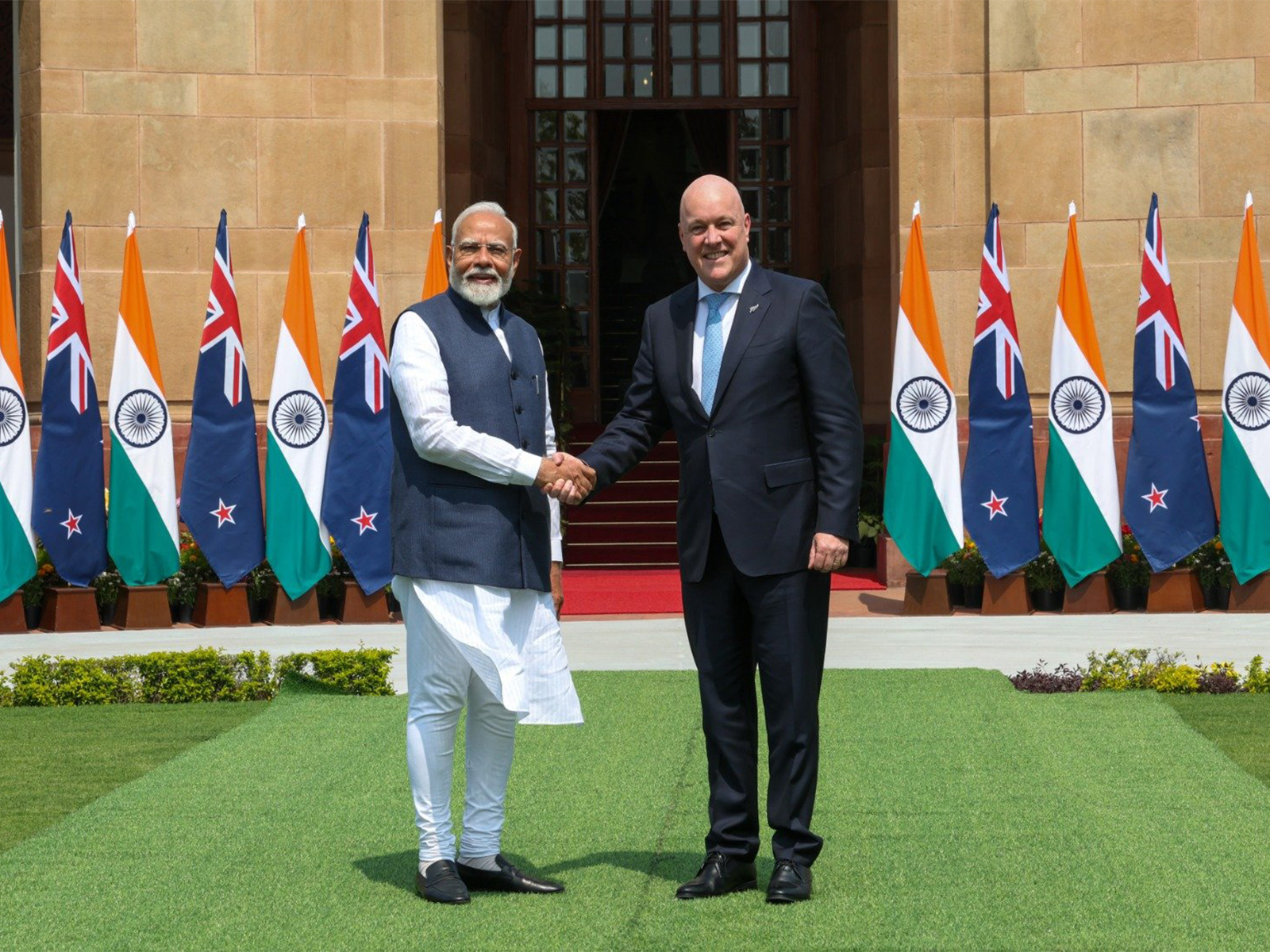
New Delhi [India], December 22 (ANI): The India-New Zealand Free Trade Agreement (FTA) is expected to deliver a significant boost to India’s exports, with New Zealand offering zero-duty market access on 100 per cent of its tariff lines covering all Indian exports from the date of entry into force.
Labour-intensive sectors are among the biggest gainers. With New Zealand eliminating tariffs that earlier peaked at up to 10 per cent, Indian exporters of textiles and clothing will receive zero-duty access across 1,057 tariff lines.
India’s textile and apparel exports rose to USD 36.9 billion in 2024-25, while exports to New Zealand increased to USD 103 million, a trend expected to accelerate given New Zealand’s annual global textile imports of nearly USD 1.9 billion.
The leather and footwear sector, covered under 181 tariff lines, will also benefit from full tariff elimination. India’s leather exports stood at USD 5.5 billion in 2024-25, with New Zealand importing over USD 0.5 billion worth of leather products annually from the world.
In engineering goods, tariffs on 1,396 tariff lines have been eliminated. Engineering exports to New Zealand rose sharply from USD 47.8 million to USD 68.3 million in 2024-25, and duty-free access is expected to enhance India’s competitiveness in a market that imports nearly USD 11 billion worth of engineering products annually.
The pharmaceutical sector, a key strength of India, will gain zero-duty access across 90 tariff lines. New Zealand’s pharmaceutical imports average USD 1.4 billion annually. In addition, expedited regulatory pathways and acceptance of inspections by comparable regulators such as the US FDA, EMA (European Medicines Agency) and UK MHRA (Medicines and Healthcare products Regulatory Agency) are expected to reduce compliance costs and speed up approvals.
India’s agriculture and processed food exports are also set to benefit. Tariffs of up to 5 per cent on fruits, vegetables, cereals, coffee, spices and processed foods have been eliminated. The agriculture sector covers 1,379 tariff lines, significantly improving market access for Indian agri and food-processing exporters. India’s agricultural exports rose to USD 51.8 billion in 2024-25.
The marine sector, covered under 363 tariff lines, will see duties of up to 5 per cent reduced to zero, supporting higher exports in a market that imports around USD 260 million worth of marine products annually.
Similarly, plastics and rubber, spanning 397 tariff lines, will gain from full duty elimination. India’s exports to New Zealand in this sector increased from USD 18.9 million to USD 23.7 million in the last fiscal year.
Beyond goods, the FTA delivers New Zealand’s best-ever services offer, covering 118 services sectors, including IT, professional services, education, healthcare, construction, tourism and audio-visual services, with MFN treatment in 139 sub-sectors. India’s services exports to New Zealand grew to USD 634 million in 2024, led by IT, travel and business services.
The agreement also strengthens mobility and talent pathways, with provisions for post-study work visas of up to three years for STEM graduates, four years for doctoral scholars, a 5,000-strong temporary employment visa quota for skilled professionals, and 1,000 working holiday visas annually.
Bilateral merchandise trade between India and New Zealand stood at USD 1.3 billion in 2024-25, registering a 49 per cent growth over the previous year. With zero-duty access, regulatory facilitation and services liberalisation, the FTA is expected to unlock the next phase of growth across multiple Indian export sectors while strengthening India’s footprint in Oceania and the wider Indo-Pacific region. (ANI)
Disclaimer: This story is auto-generated from a syndicated feed of ANI; only the image & headline may have been reworked by News Services Division of World News Network Inc Ltd and Palghar News and Pune News and World News

HINDI, MARATHI, GUJARATI, TAMIL, TELUGU, BENGALI, KANNADA, ORIYA, PUNJABI, URDU, MALAYALAM
For more details and packages